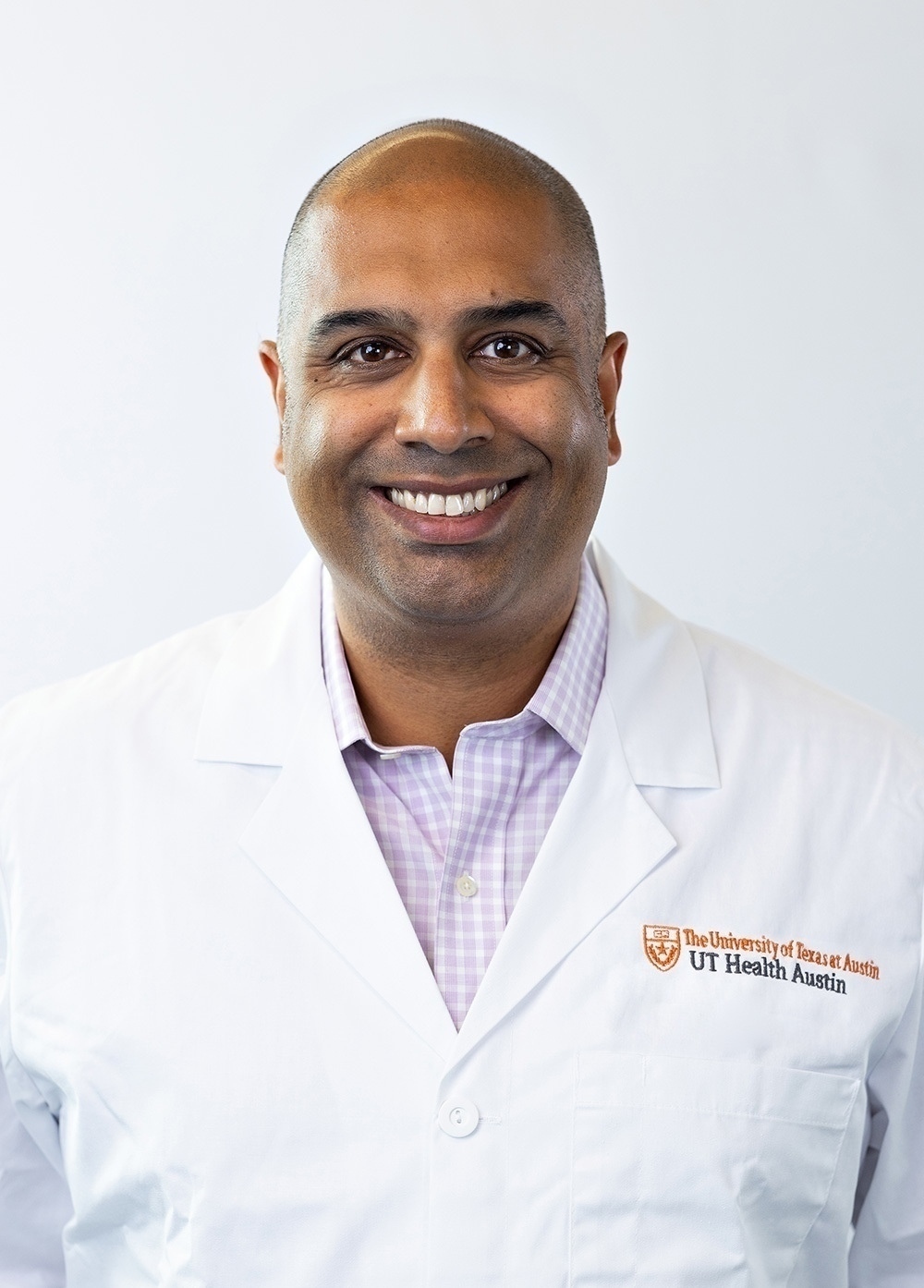
Joga Ivatury, M.D., MHA
Associate Professor, Department of Surgery & Perioperative Care
The Division of Colon and Rectal Surgery within the Department of Surgery and Perioperative Care at Dell Medical School provides comprehensive, compassionate care for patients with diseases of the colon, rectum and anus. Faculty members within the division specialize in the latest minimally invasive and robotic surgical techniques, ensuring optimal outcomes and faster recovery times.
In addition to patient care, the division is committed to advancing the field through groundbreaking research and innovative educational programs. The division’s mission is to improve the lives of patients while training the next generation of leaders in colon and rectal surgery.
With a focus on collaboration and innovation, the division strives to address the unique needs of each patient while contributing to the broader medical community through research and education.
Ongoing efforts in the division explore minimally invasive and robotic surgery that improve patient outcomes and recovery times.
The divsion provides multidisciplinary care for colorectal cancer, including prevention, surgical, medical and radiation oncology.
The division provides comprehensive treatment for Crohn’s disease and ulcerative colitis, with a focus on improving quality of life.
The division provides care for benign and bothersome conditions, including hemorrhoids, anal fistula and fissures.
The division provides care for diverticular disease conditions, including diverticulitis, abscess and fistula.
The division provides specialized care for conditions such as rectal prolapse, fecal incontinence and constipation.
The division develops future leaders in colon and rectal surgery through residency, fellowship and continuing education programs.
The division undertakes cutting-edge research in colorectal disease, including clinical trials and translational studies.
Associate Professor, Department of Surgery & Perioperative Care
Our mission is to provide exceptional care while advancing the field of colon and rectal surgery through research and education. Together, we are shaping the future of colorectal health.
— Joga Ivatury, Division Chief
The division offers a full spectrum of care for conditions such as colorectal cancer, inflammatory bowel disease, diverticulitis and pelvic floor disorders. A multidisciplinary team ensures personalized treatment plans tailored to each patient’s needs.
The division is at the forefront of research in colorectal diseases, with a focus on improving surgical techniques, understanding disease mechanisms and developing new therapies. Current projects include clinical trials for advanced treatments and studies on the long-term outcomes of minimally invasive procedures.
Choose settings that help you use this site more easily.
Font size
Hide for
