Maternal-Fetal Medicine Fellowship

Training patient-centered physicians in maternal-fetal medicine

The mission of the Maternal-Fetal Medicine Fellowship at Dell Medical School at The University of Texas at Austin is to advance the care of women at risk for obstetrical complications through innovative education, patient-centered care and scientific discovery. The program is focused on shaping a unique and comprehensive educational environment that prepares physicians to practice in a dynamic, value-based healthcare system. Additionally, the program encourages its trainees’ commitment to lifelong learning and evidence-based practice to provide outstanding individual care and sustain measurable improvements in the health of the greater population.

The Maternal-Fetal Medicine Fellowship’s educational goal is to provide advanced training to physician-scientists for the medical, surgical, obstetrical, fetal and genetic complications of pregnancy. Upon completion of training, graduates are prepared to practice independently, become leaders in their field, engage in scientific discovery, successfully offer consultation to their peers and deliver high-quality, value-based, patient-centered care to women. 

Fellows learn, practice and reinforce person-centered, multidisciplinary and interprofessional care in a system that recognizes and rewards value by collaborating with and providing subspecialty-specific consultation to other providers. Additionally, the program combines traditional and innovative curricula and teaching methods through the following overall program objectives.

  • Develop and refine comprehensive, advanced medical knowledge and procedural skills to provide outstanding patient care in the following areas: medical and surgical complications of pregnancy, fetal evaluation, genetic evaluation of women, families, and fetuses, ultrasound and prenatal diagnosis, critical care of pregnant women, interpretation of perinatal pathology, care/collaboration with other specialists in caring for women who require cesarean hysterectomy, and infectious diseases that affect mother or fetus.
  • Learn and apply the principles of value-based care to promote cost-effectiveness, improve patient safety and enhance the quality of experience for the patients in our community.
  • Collaborate with and lead cooperative, interprofessional, and multidisciplinary teams to improve patient outcomes.
  • Investigate and evaluate patient care practices, appraise and assimilate scientific evidence and improve patient care through continuous life-long learning, self-assessment, teaching and scientific discovery.
  • Adhere to ethical and moral principles and sensitivity to diverse patient populations.

The Maternal-Fetal Medicine Fellowship is affiliated with Dell Med’s Department of Women’s Health.

Helpful links
Contact information

Emily Weerts
MFM@austin.utexas.edu

Program director

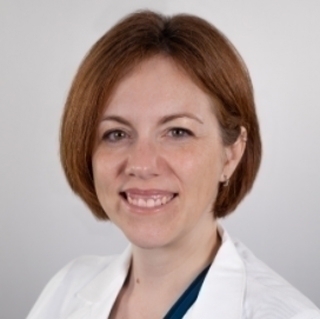
Lorie M. Harper, M.D.

Professor, Department of Women's Health

Training facilities

Learn more and apply: Maternal-Fetal Medicine Fellowship

A person types on a laptop computer at a wooden desk. Their hands rest on the keyboard while they work or study. A smartphone, tablet, and notebook lie nearby, suggesting a multitasking digital workspace. Warm lighting creates a focused yet comfortable office atmosphere.

About the application process

Applications to the fellowship are accepted exclusively through the Electronic Residency Application Service.

A medical professional in a white coat uses a digital tablet at a desk. The person is interacting with the touchscreen, likely reviewing or entering information. Papers and a clipboard lie on the table, suggesting medical records or patient forms. A stethoscope is partially visible, reinforcing the clinical healthcare setting.

Traditional and nontraditional training

The curriculum includes a variety of teaching formats including case-based learning, small group discussions, hands-on simulation and skills workshops and self-directed learning.

The image shows a group of healthcare professionals standing together in a brightly lit hospital corridor. The figures are intentionally blurred, emphasizing the concept of teamwork rather than individual identities. Sunlight streams through large windows, creating a soft, airy atmosphere. The overall scene suggests collaboration, consultation, and modern medical care.

View program faculty

Explore the profiles of the faculty members affiliated with the fellowship.

Advancing Care Transformation

Learn to tackle systemic challenges in health and develop your skills as a systems-ready leader, all while completing your residency or fellowship.