
$100M investment fuels a bold new vision for health care
A defining gift with the power to change care for generations.
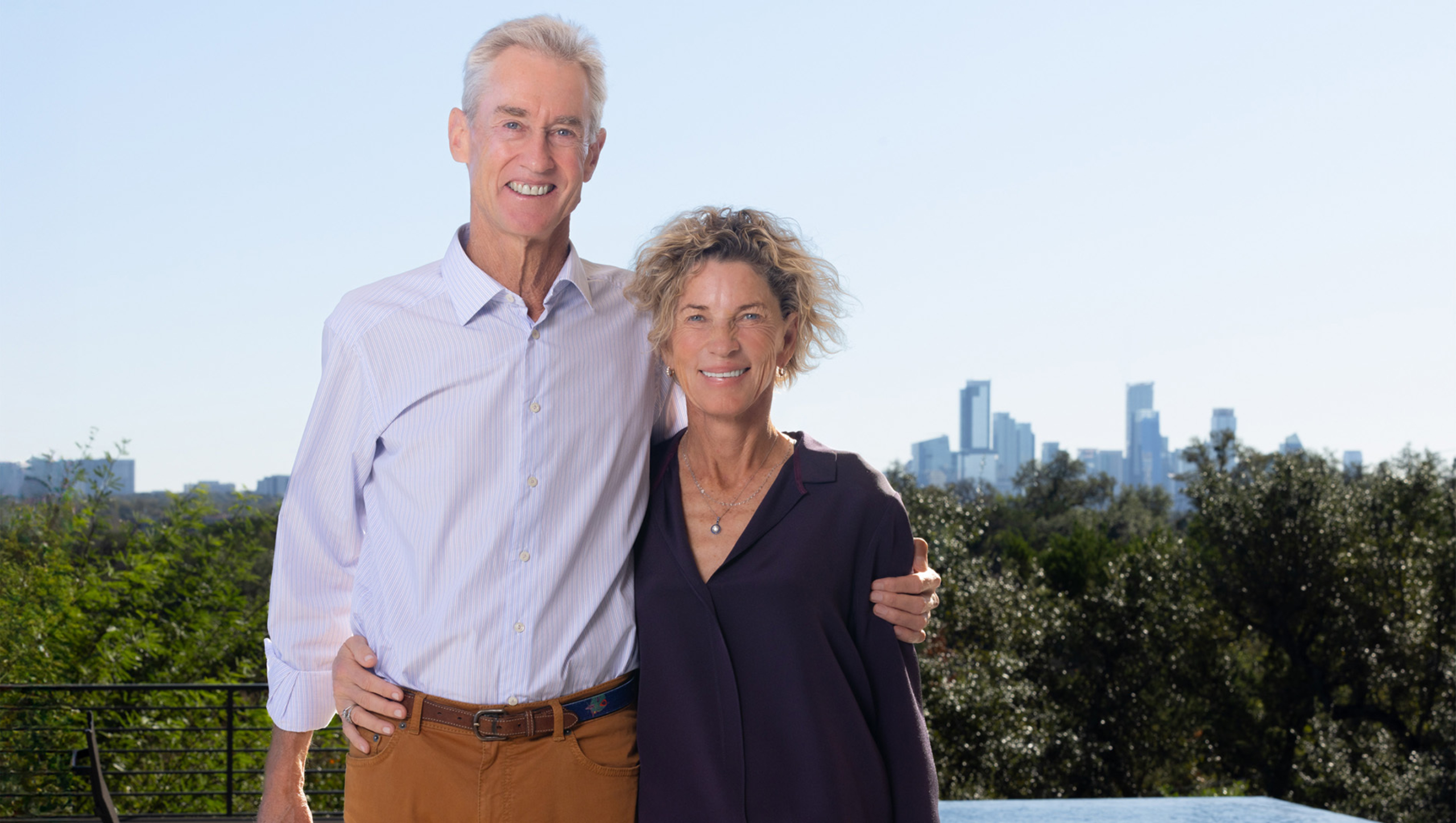
Austin residents Tench and Simone Coxe have pledged $100 million to support The University of Texas’ emerging medical center.
Simone and Tench Coxe have seen what world-class health care can do for a community, and they’ve seen what happens when people can’t get the care they need at home. Now they want to bring those opportunities to Austin and change the world along the way.
In a transformational first for The University of Texas’ emerging academic medical center, the Austin residents have pledged $100 million toward a future-forward, patient-centered academic health enterprise in their adopted hometown. A key component of the medical center will be a new UT hospital focused on complex and serious conditions, combined with the world-renowned UT MD Anderson Cancer Center’s expansion to Austin. In a region where the rate of people leaving the area to seek care for serious medical needs is as high as 25%, the hospital development will be part of an integrated academic health system bringing advanced treatments closer to home for Central Texans. It is expected to open in 2030.
“Great medical care changes lives, and we want more people to have access to it,” Simone said. “What inspired us was a bold vision to build something here that could become a new model for health care, in Austin and beyond.”
The Coxes’ gift, one of the largest in the University’s history, is a catalyst for monumental change to the Central Texas health care landscape. The UT medical center will bring an advanced level of care to Austin, reflecting both the city’s rapidly growing health care needs and the world-class expertise driving the medical center’s development.
The Coxes moved to Austin five years ago after decades in Silicon Valley. Their gift is the largest to UT’s medical center to date, and one they hope will seize a rare convergence of time, need and setting. With technology advancing at an unprecedented rate and local gaps in complex care, the Coxes see now as the time and The University of Texas at Austin as the place.
“It’s the right moment,” Tench said. “You’ve got a greenfield, and you can go.”
A vision worth building
The couple’s gift is also an investment in the vision for what a modern integrated academic health system can do. As senior vice president for medical affairs at UT and dean of Dell Medical School, Claudia Lucchinetti, M.D., shared a plan for what health care should look like in the 21st century. The Coxes believe in that vision and in Lucchinetti’s ability to execute it.
“A great leader and a chance to build something from the ground up, with the support of UT, don’t come along often,” Tench said. “What excites us is the opportunity for UT’s medical center to raise the bar for academic medicine.”
The Coxes’ support will speed the development of a digitally enabled, patient-centered health system designed to deliver innovative care for complex conditions and generate discoveries that improve health across the state and around the world.
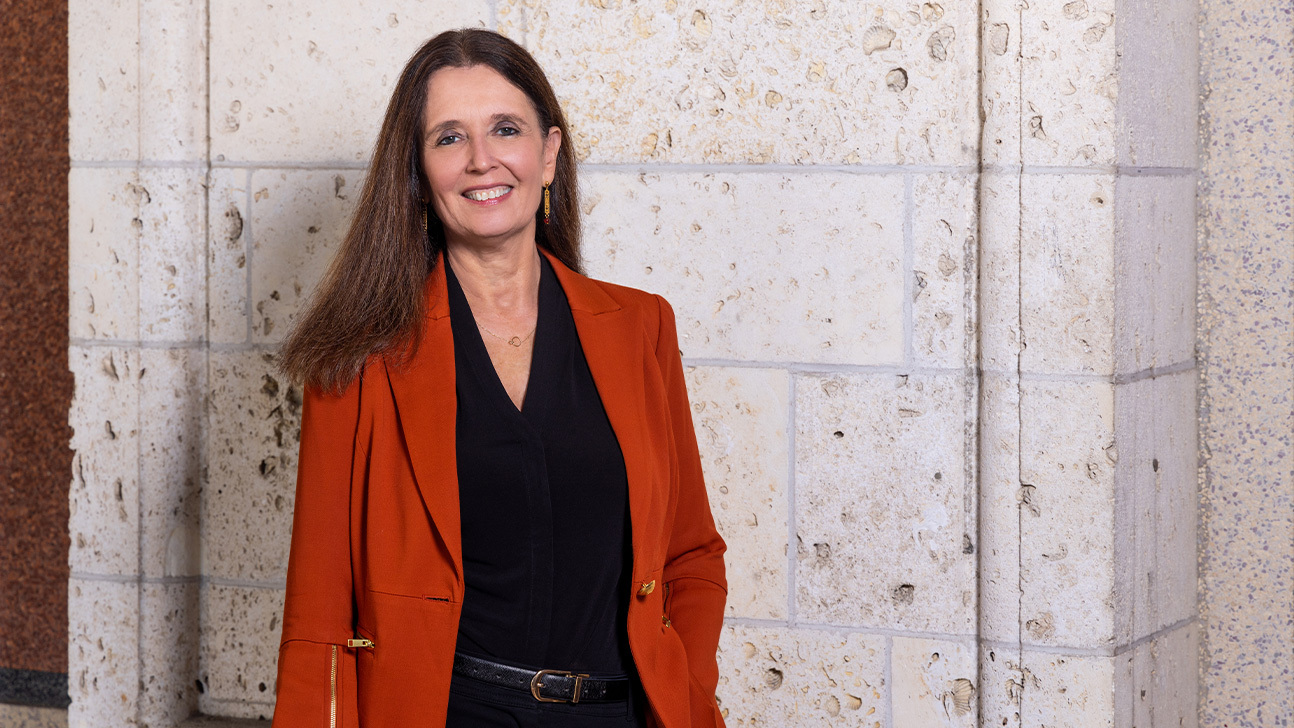
Dell Medical School Dean Claudia Lucchinetti.
“This extraordinary act of generosity adds momentum to bring our boldest aspirations to life and change health care in Austin as we know it,” Lucchinetti said. “UT’s medical center will unite care, discovery and education in ways that redefine what’s possible, for Texas and beyond.”
UT President Jim Davis described a model of academic medicine that others will look to for decades to come.
“Integrating UT’s world-class research into this new, advanced medical system will be a game changer,” Davis said. “What is starting here will change medicine, life sciences research and the health and vitality of countless lives. The Coxes’ generosity is transformative in making this happen, and we cannot thank them enough.”
Transforming gratitude into impact
The Coxes have seen their own family benefit from the generosity of others and feel compelled to return the favor. Philanthropy shaped the schools they and their children attended, as well as Lucile Packard Children’s Hospital at Stanford Medicine, where one son was successfully treated for Burkitt lymphoma. For Simone and Tench, that means creating systems and services that will benefit people the same way they benefited from past investments.
“We really want to pay that forward,” Simone said.
Their son’s experience at Stanford, along with watching a friend forced to leave Austin for cancer treatment, convinced them that Central Texans needed world-caliber care close to home.
“We have a close friend who had to travel to Houston for care she should have been able to get here at home,” Tench said. “Having spent my career backing strong leaders, meeting Claudia made it clear: Supporting the vision for the UT medical center is exactly the opportunity Austin needed.”
Fueling innovation with flexibility
Whether in business or philanthropy, the Coxes believe in backing someone with vision and giving them room to lead. Tench’s 34 years in venture capital, including early support for Nvidia, convinced him of the perils of micromanagement.

With that in mind, they placed no restrictions on their gift, giving UT and its medical center the flexibility to respond to unanticipated challenges and opportunities and to keep pace with fast-evolving technology.
“We built a lot of companies in Silicon Valley based on the idea that the facts are going to change daily, and you want to enable a management team to react to those facts and make choices,” Tench said.
At Sutter Hill Ventures in Palo Alto, California, Tench supported a string of exceptional leaders, including Nvidia co-founder Jensen Huang. The investment philosophy, he says, is simple: “It’s generally about recognizing a big opportunity and then supporting a great leader and giving them the capital they need to execute.”
As a member of several nonprofit boards, Simone echoes the importance of that trust.
“We really want to give UT’s medical center the amount of freedom they need to make the decisions they need to make,” she said.
How AI could change everything
Many of those decisions will be shaped by the accelerating pace of AI and other technologies. The value of AI, says Tench, is straightforward: “Artificial intelligence isn’t some miracle that occurs out in the air,” he said. “It’s really just faster, better answers. There’s going to be better analytics. There’s going to be better service.”
The opportunity AI provides to accelerate progress in health care will be felt at every level, he says.
“AI’s impact, and faster, better computing’s impact, on this new medical center is going to be greater efficiency, more productivity for a nurse or a doctor, and a way better patient experience,” he said.
Why now, and why go public
The Coxes typically give quietly, often anonymously. But they chose to speak publicly about this gift in hopes of encouraging others to follow suit.
“One of the things that happens with bigger gifts is that it de-risks it a bit for some people,” Simone said. “Our approach to philanthropy is to invest and believe, knowing that there’s a risk and not everything’s going to be perfect. We hope by making this gift, we can help encourage others to take that same view.”
Lucchinetti noted that the Coxes are relatively new to Austin and unaffiliated with UT: a testament, she said, to the power of the vision for an academic medical center in Austin, currently the largest city in the country without one.
“That they chose to invest at this level speaks volumes about the urgency and importance of our work,” she said. “We are confident this gift will inspire others to join us in shaping the future of health.”
A legacy that looks forward
For the Coxes, the chance to help create something with long-lasting, far-reaching impact is deeply meaningful, especially in a city they now call home.
“In 25 years, I hope people will view UT’s medical center as the premier health care provider in the country, if not the world,” Simone said. “And that other hospital systems around the country will emulate the kind of integrated, holistic, advanced services that Claudia is envisioning.”