
Dell Med researcher receives five-year NIH grant to closely study underlying mechanisms that may point to long-awaited treatments for mitochondrial disease.
Ankit Sabharwal, Ph.D., assistant professor in Dell Medical School’s Department of Pediatrics and Center for Rare Disease, has been awarded a Maximizing Investigators’ Research Award from the National Institute of General Medical Sciences, part of the National Institutes of Health.
Mitochondrial disease affects about 1 in 5,000 people and can disrupt how organs and body systems develop and function. These disorders, in which cells fail to produce enough energy, can arise from mutations in either nuclear DNA or mitochondrial DNA, the small genome carried inside mitochondria. Cells can contain a mix of normal and mutant mitochondrial genomes — a state called heteroplasmy — but how a cell decides which copies of mitochondrial DNA to keep or eliminate is not yet understood.
“There is no cure for mitochondrial disease right now. The long-term goal of this grant is to understand mitochondrial DNA quality control well enough to eventually design therapeutic regimen,” Sabharwal said. “If we can define which cellular pathways select for or against specific mutations, that opens a path toward therapies that shift away from disease-causing mitochondrial DNA, which isn’t yet available to patients.”
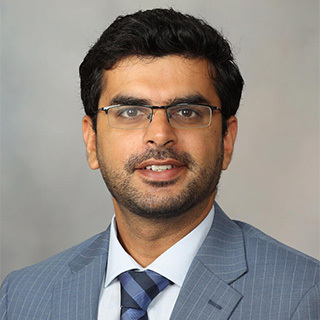
Ankit Sabharwal, Ph.D.
The five-year grant, totaling over $2.17 million, will support Sabharwal in using zebrafish to study this decision process directly in a living animal, revealing the fundamental mechanisms responsible for mitochondrial DNA quality control.
Even after more than 400 million years of separate evolution, zebrafish and human mitochondrial genomes have remained largely similar. By closely examining heteroplasmy, Sabharwal and his lab aim to provide better foundational knowledge of mitochondrial function, including the progression of mitochondrial diseases.
The grant will also support Sabharwal in building a research program at the University aimed at developing and training future scientists working in mitochondrial genetics.
Sabharwal joined Dell Medical School in 2023 following his postdoctoral training at Mayo Clinic. He earned his doctorate at the CSIR-Institute of Genomics and Integrative Biology, India. His research studies human and zebrafish mitochondrial biology and genomics, with a focus on developing rare genetic disease models in zebrafish using gene editing tools for mitochondrial DNA and nuclear-encoded mitochondrial proteins.
About the award
The National Institute of General Medical Sciences supports fundamental research that increases our understanding of biological processes and lays the foundation for advances in disease diagnoses, treatment and prevention. The R35 MIRA grant provides investigators with stable funding and flexbility, enhancing scientific productivity and the chances for important breakthroughs in their research program.