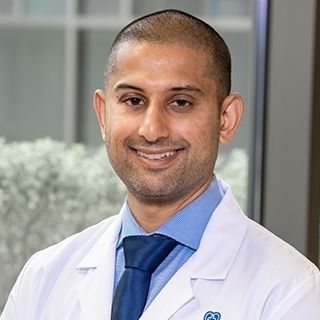
Mark Gajjar, M.D.
Assistant Professor, Department of Internal Medicine
Internal Medicine
The Interventional Cardiology Fellowship at Dell Medical School at The University of Texas at Austin is a one-year program focused on preparing fellows in mastering the techniques involved in coronary interventions and advanced structural and vascular procedures as well as developing expertise in the assessment of procedural risk and benefit in interventional cardiology care.
Didactic instruction — including lectures, seminars, assigned readings, written exercises and online modules — builds a broad knowledge base of the biomedical, clinical, epidemiological and social-behavioral sciences. Didactic instruction is a priority, and residents are protected from clinical responsibilities for educational time.
One half-day weekly is protected from clinical duties for didactics, self-directed study and scholarly efforts.


The program provides comprehensive training in the diagnosis, care and endovascular treatment of patients with cardiovascular disease and positions graduates to assume positions of leadership in the field of interventional cardiology.
The Interventional Cardiology Fellowship is affiliated with Dell Med’s Department of Internal Medicine.
Ileanna Guerra
ICfellowship@austin.utexas.edu
Assistant Professor, Department of Internal Medicine
Internal Medicine
The Interventional Cardiology Fellowship offers fellows opportunities to develop expertise in percutaneous coronary interventions and non-coronary cardiac structural interventions and management of peripheral vascular disease. Ascension Seton Medical Center Austin is the home of advanced cardiovascular care in Austin, Texas, including the performance of complex coronary interventions and structural heart and valvular heart surgery. Ascension Seton Medical Center Austin is also the only heart transplant program in the region. Dell Seton Medical Center at The University of Texas will also serve as a primary training site for coronary interventions and treatment of complex peripheral artery disease.
Choose settings that help you use this site more easily.
Font size
Hide for


